

When every line needs a story, choosing becomes difficult
In a design meeting, people often ask a symbol to show the company's activity, history, reliability, customer care, innovation and ambitions. Gradually, the logo becomes an illustration in which every line must hold a hidden meaning.
But the customer seeing that logo was not at the presentation. Without context, the same shape can suggest different associations. It is not reasonable to expect someone to reconstruct all a company's values by examining a symbol's geometry.
An owner's wish to participate is understandable: they know and care for their business. Difficulty arises when a personal idea becomes the main criterion for a decision that should serve communication objectives.
A logo connects the company with its audience's experience
Its role is to help identify whose product or message it is, find a familiar company and accumulate recognition through repeated contact.
Emotional meaning grows with experience. The product, service, packaging, website, advertising and business behavior become associated with the symbol. Not all that value is contained in the drawing from day one.
There are two very different ways to evaluate a proposal:
- Hidden code: asking the audience to guess what a shape means without an explanation.
- Observable performance: checking whether it is recognizable, distinctive and effective in the applications you need.
The second approach allows discussion of concrete decisions rather than attempts to guess an interpretation.
Values become visible through the entire system
Visual tone emerges from the relationship between logo, color, typography, composition, images, graphic elements, templates, packaging, interfaces and motion. Copy, product and service turn the company's promises into observable experiences.
We can distinguish four levels:
- Symbol: identifies and helps recognize the source.
- Visual language: connects color, typography, images and composition.
- Messages: defines tone, arguments, promises and explanations.
- Experience: demonstrated through the product, service and consistency of behavior.
That is why asking a logo to “communicate trust” is no substitute for building a trustworthy business. Design can support that perception, but behavior must sustain it.
Five criteria for evaluating a logo
- Differentiation: is it quickly distinguishable from direct competitors?
- Memorability: does it leave a clear visual impression after repeated encounters?
- Legibility: does it retain its character at the sizes, on the materials and with the processes you need?
- Coherence: does its visual tone match the company's actual profile?
- System: can it work alongside typography, colors, images and templates?
These criteria do not eliminate all subjective judgment. They do help connect that judgment with the business problem and situations that can be reviewed.
The owner provides context; the designer is responsible for the method
The person running a business understands the product, audience, restrictions and plans. Their participation is essential to checking that a proposal is grounded in reality.
The designer must establish visual criteria and explain the consequences of the chosen direction. Defending a result because it “looks good” is not enough, just as assigning a story to every line is not enough.
At your next presentation, try this question: “What tasks must this symbol perform?” It shifts the conversation from guessing meanings to reviewing parameters.
The point is not that shapes have no associations. It is that a single logo should not carry the task of explaining the company's entire mission, vision and values to a stranger. That is the job of the complete brand.
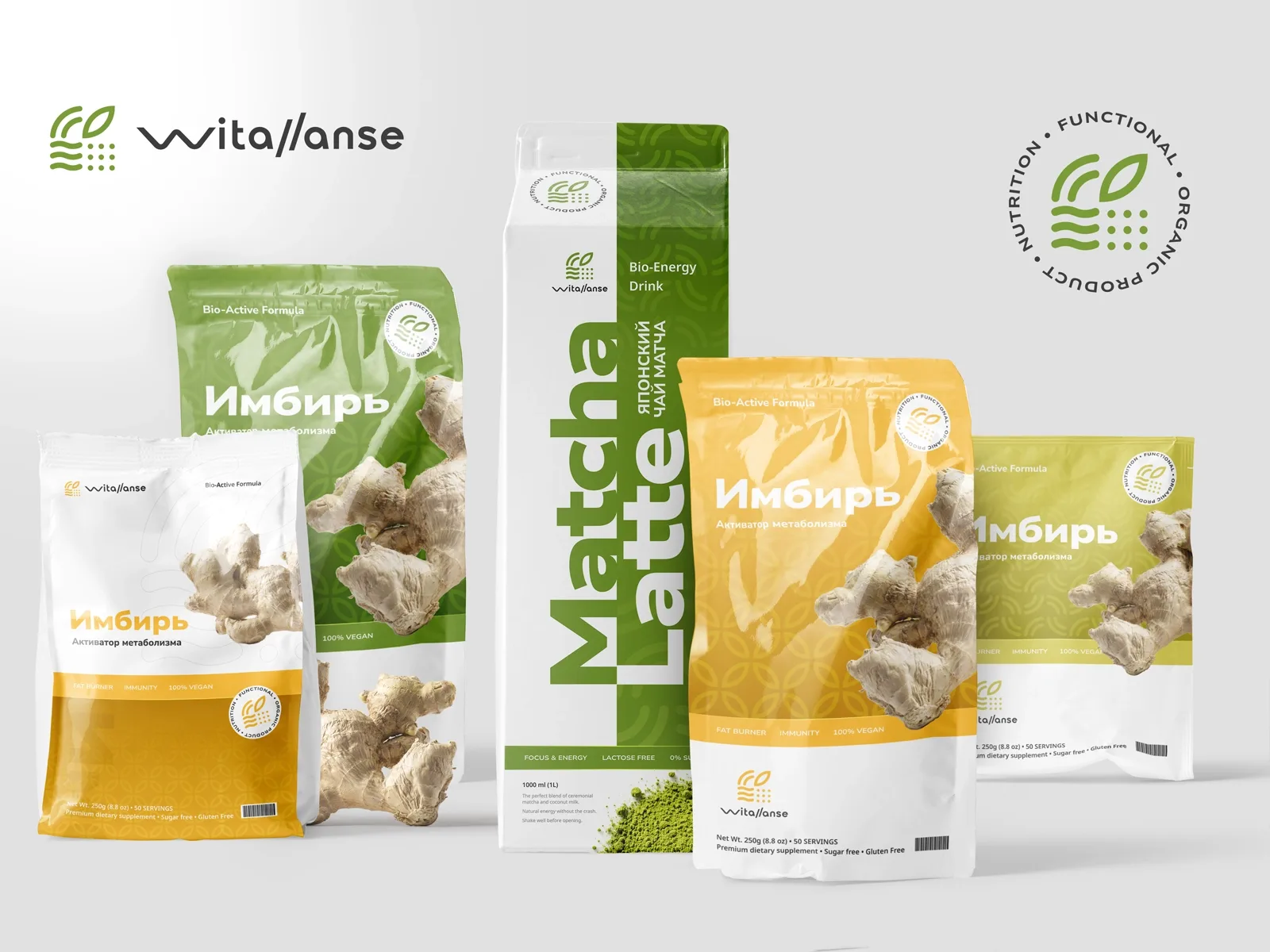
In the Witallanse case study, we show how a symbol is supported by color, typography and packaging. To define what your brand needs, explore our branding services or tell us about your project.
Adapted from the original article by Denis Espinoza.